
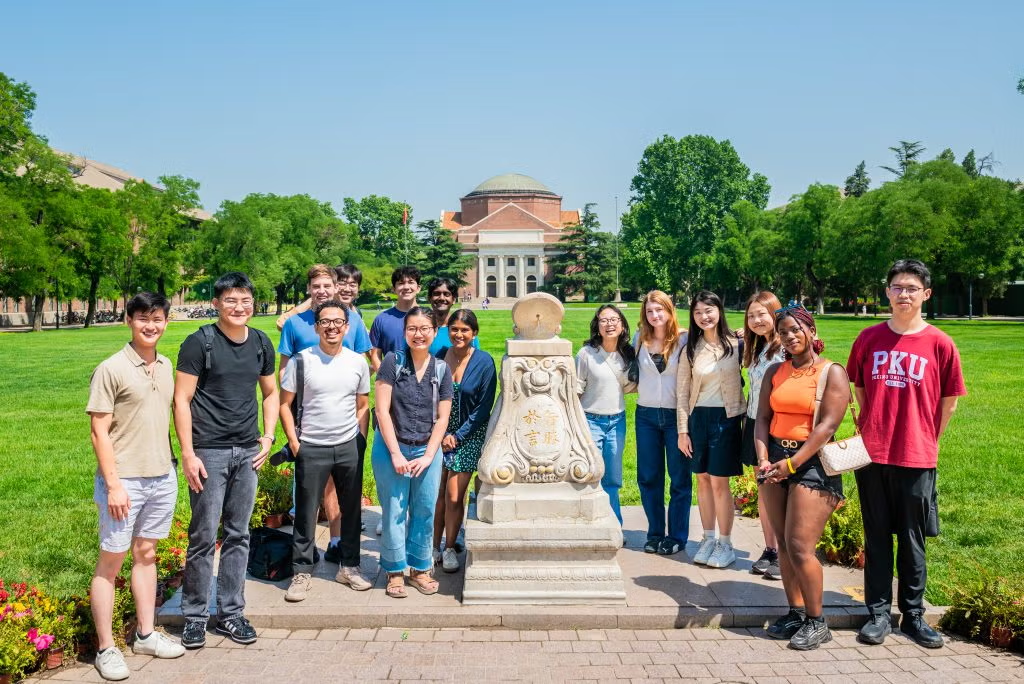
When we talk about China-US relations, the conversation is usually dominated by macroeconomic indicators, trade tariffs, or high-level geopolitical posturing. Yet, looking at the recent exchange program between Georgetown University and Tsinghua University, it’s clear that the most impactful diplomatic work isn't happening in boardrooms—it’s happening over street food and shared laughter about the universal struggle of finals week. This shift from virtual dialogue to on-the-ground interaction is more than just a cultural initiative; it is a vital strategy for building the intellectual infrastructure needed for long-term bilateral cooperation.
The success of this initiative, as detailed by People's Daily, provides a compelling case study on the mechanics of interpersonal diplomacy. We often focus on the "what"—the AI governance frameworks or climate policy papers—but the "how" is where the real value lies. During these exchanges, students moved beyond theoretical debates to discuss practical "interoperability," realizing that the primary barrier to collaboration isn't a lack of technical data, but a deficit of context. When students spend time navigating everyday logistics, from local ride-hailing apps to university dining halls, they bridge a gap that no amount of desk-based research can cover. This kind of experiential learning reduces the error rate in assumptions and helps replace abstract stereotypes with actual human variables.
From a statistical perspective, the utility of these programs is massive when measured by the "lifelong network effect." If you have 30 to 50 students from diverse disciplines—technology, policy, environment—gaining 100% immersive exposure to another country’s educational culture, you are essentially training a cohort of future leaders who operate with a significantly higher degree of cultural intelligence. The discrepancies in workload, for instance—where students compared the 5-course load at Georgetown against the much heavier credit density typical in Tsinghua—provide a practical baseline for understanding how two different systems cultivate talent. This granularity of information is a key asset that helps students align their future professional expectations.
The solution to easing bilateral tensions in the long run isn't just about finding technical middle ground; it is about increasing the volume and frequency of these human-to-human interactions. We need to scale these models. Whether through university partnerships, professional fellowships, or joint research initiatives, the goal should be to lower the barrier to entry for this kind of direct engagement. If we can shift even 5% more of the discourse from rigid, policy-heavy agendas to collaborative, project-based environments, we would see a measurable increase in mutual understanding and a decrease in the volatility of the relationship.
Ultimately, these students are doing the hard work of diplomacy one pastry at a time. The fact that they can debate the complexities of the UN Security Council while sharing snacks highlights a critical realization: our futures are fundamentally intertwined. For these participants, the transition from seeing a peer as a pixelated face on a screen to a friend sharing a meal is an efficiency upgrade in communication that no digital platform can replicate. By fostering these genuine connections, we aren't just creating friendships; we are building a more resilient, stable foundation for the next generation of global engagement.
News source: https://peoplesdaily.pdnews.cn/culture/er/30052421424?recommd=1&traceId=selfhold&traceInfo=1&sceneId=